





Pothos - The Ultimate Growing Guide from Proven Winners®
This versatile houseplant is easy to grow, even for beginners
 Check here to see if your Local Garden Center or The Home Depot® is carrying leafjoy®.
Pothos, also known as devil’s vine, golden pothos and devil’s ivy, is a popular indoor houseplant grown for the vining habit and heart-shaped leaves that occur in an array of colors and variegated patterns. One of the easiest houseplants to grow, Photos plants are forgiving of a range of growing conditions, making it suitable for beginner houseplant growers as part of photos growing guide from Proven Winners.
Native to tropical regions in the South Pacific, pothos indoor plant care is easy, as it is especially versatile in indoor environments. This quick grower can be allowed to trail, climb or be trimmed back for a bushier appearance. Pothos plants contain calcium oxalates, a compound which can be mildly toxic to children and pets if ingested, so care should be used when growing and displaying them in your home.
Pothos vs. Philodendron: Pothos and heart-leaf philodendron are often confused for their nearly identical appearance. Pothos leaves are thicker and textured and may be asymmetrical, while philodendron foliage is smoother and more uniformly heart-shaped. Pothos plants are more likely to have variegated leaves than philodendron.
POTHOS PLANT CARE & PLANTING
How to plant: Pothos plants grow quickly and will need repotting every 1-2 years. When roots begin to grow through the drainage holes in the bottom of the pot, it’s time to transplant into a larger pot or successful photos plant care. When repotting, wait until spring when plants are actively growing.
- Choose a pot that is 1-2 inches larger in diameter and slightly deeper than the previous pot.
- Remove your pothos plant from its current pot.
- Check for signs of root rot and cut out any visibly damaged portions.
- This is also a good time to inspect plants for any other possible problems.
- Clean and sterilize container if it has been previously used.
- Make sure there are adequate drainage holes in the bottom.
- Place fresh potting soil in the bottom of the new pot.
- Place your pothos plant at the same level as it was in the previous container.
- Fill in with fresh soil around the sides of the pot up to the base of the plant.
- Push down gently on the soil to remove air pockets, and water plants well.
Light: Pothos light needs can vary depending on the variety. Photos Plants can tolerate different types of light, including low light and artificial lighting in office environments. They perform best in medium to bright indirect light near a window. Avoid placing plants in direct sunlight, which can burn or discolor foliage for better photos plant care results. Too little light will cause variegated or colored foliage to fade.
See leafjoy® plant collections for various light conditions:
Temperature: In their native tropical habitat, pothos grow in temperatures between 70-90 degrees F. The ideal photos indoor plant care temperature for these plants following photos growing guide, is between 65-80 degrees F. Temperatures below 50 degrees F can damage or kill plants. Avoid any sudden temperature swings, and keep plants away from cold drafts and heating vents.
Humidity: Pothos is acclimated to high humidity where it grows natively. For photos indoor plant care environments, humidity between 40-60% is usually sufficient. To boost humidity around plants, use a room humidifier, mist the leaves, or place plants on a pebble tray filled with water. Don’t allow the bottom of the pot to sit in water. Photos Plants can also be placed in a more humid room such as a bathroom or kitchen.
See all the leafjoy® houseplants for high humidity.
Soil: Pothos performs best in rich, well-draining soil. The best soil for pothos is a high quality all-purpose potting soil or potting mix. Perlite, vermiculite or coco coir can be added to improve drainage.
Watering: Pothos prefers moderate moisture and is somewhat drought tolerant. Allow soil to dry out in between waterings. Stick your finger in the soil to determine the moisture level. If the soil is dry down to 1-2 inches deep, it’s time to water. Overwatered plants may develop root rot or other diseases. Reduce watering during winter months when plant growth slows down following proper photos indoor plant care.
Fertilizing: Pothos plants are moderate to light feeders that benefit from regular fertilizing when plants are actively growing. In spring and summer, apply a balanced houseplant fertilizer once a month according to package instructions as part of photos growing guide from Proven Winners. Cease fertilizing in winter months when plant growth slows down.
TRY THESE PROVEN WINNERS® LEAFJOY™ VARIETIES
There are different types of pothos with colored or variegated leaves. Grow some of these varieties in your home or office:
|
|
Beautifall® Snowy Morning™ (Epipremnum aureum) is variegated with large heart-shaped leaves that are delicately marbled in shades of green, white and creamy yellow. Variegation is most pronounced when plants get plenty of bright indirect light. |
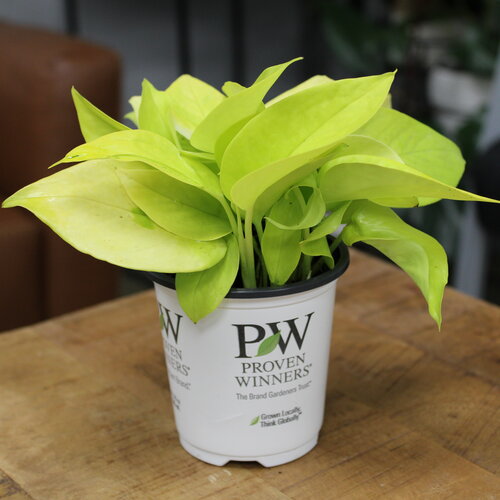
Beautifall® Off to Oz™ (Epipremnum aureum) produces large heart-shaped leaves with vibrant chartreuse-gold coloring. Plants are adaptable to a range of light conditions, but perform best in medium to bright indirect light such as an eastern or western facing window. |
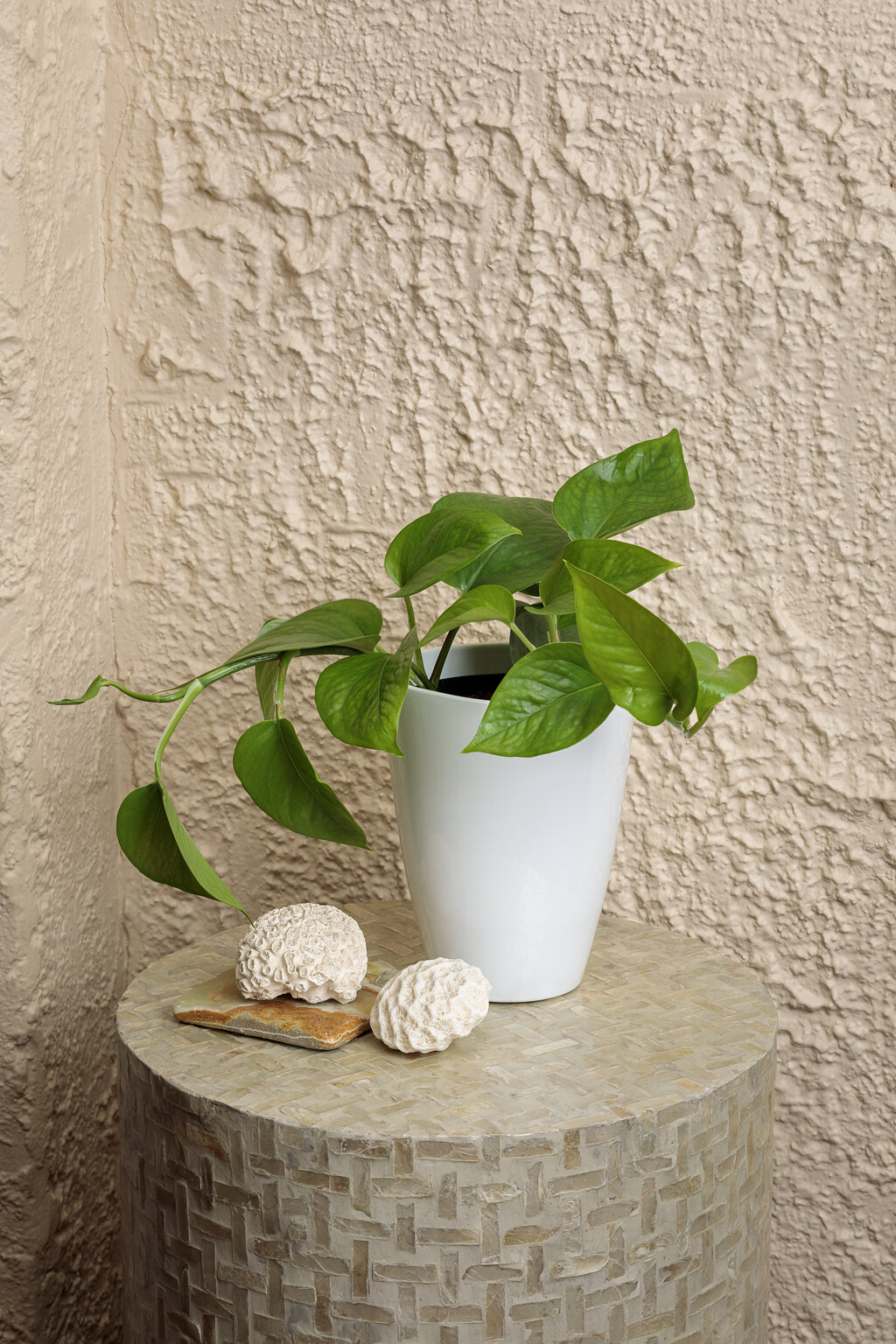
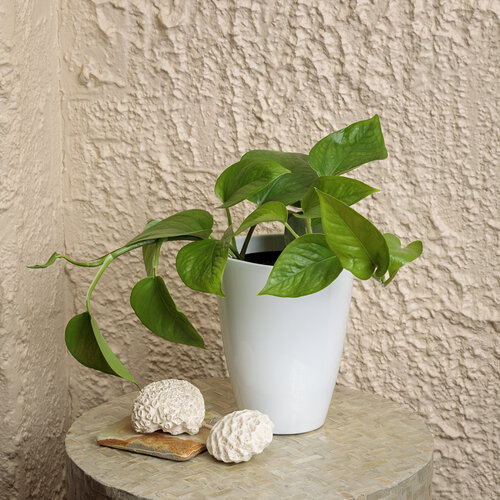
Beautifall® Jade (Epipremnum aureum) has heart-shaped green leaves and a cascading habit that adds lushness to any indoor decor. Jade pothos is especially tolerant of a range of growing conditions, making it one of the best varieties for beginners. |
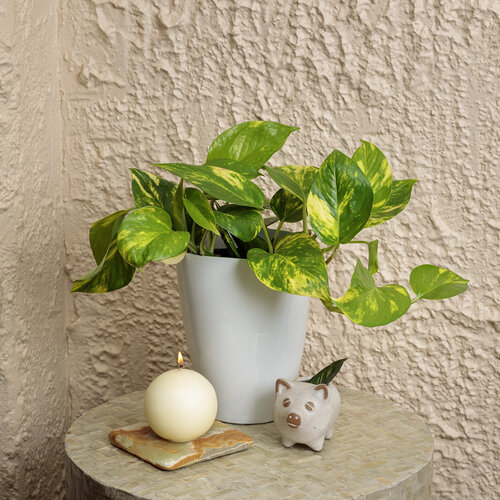 Beautifall® Summer Nights™
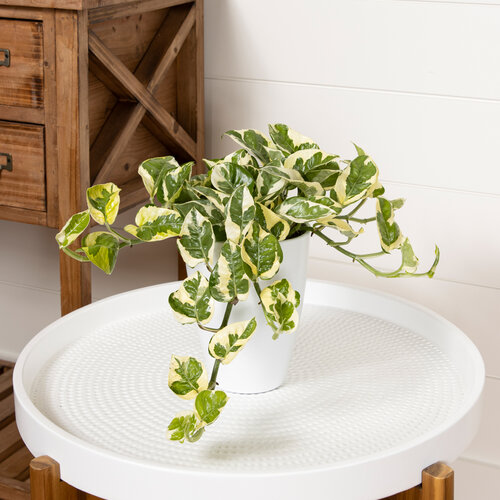 Beautifall® N' Joy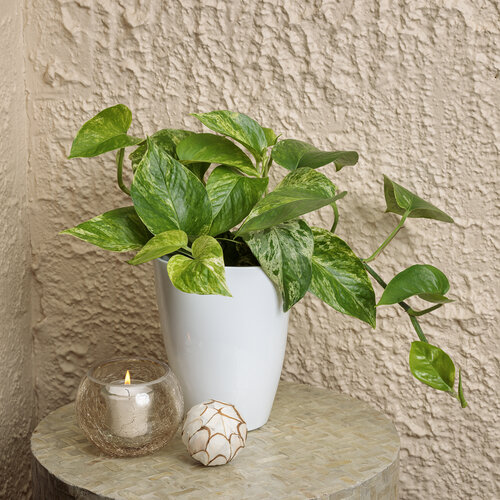
POTHOS FAQ’s
Do Pothos prefer sun or shade?
Most pothos varieties perform best in medium to bright indirect light. Avoid direct sunlight, which can scorch the foliage.
Why is Pothos called devil’s ivy?
Pothos gets its nickname of “devil’s ivy” because it’s difficult to kill. This tough houseplant is forgiving of a wide range of conditions and is virtually foolproof for beginners.
Where should I place my Pothos?
Place pothos plants near a window that receives moderate to ample bright indirect light. Varieties with variegated foliage will lose their coloring in low light.
Do Pothos need sunlight?
Direct sunlight may cause leaves to become brown and crispy. Move affected plants to a spot with indirect window light.
Are Pathos easy to keep alive?
Pothos can tolerant different light, soil and other growing conditions, making it one of the easiest houseplants to grow.
Find more easy indoor plants for beginners.
How often do you water Pothos?
Proper watering is an essential part of pothos plant care. The frequency of watering depends on several factors, including temperature, humidity and plant size. A good rule is to water plants every 1-2 weeks.
Why is my Pothos turning yellow?
There are many reasons why pothos develops yellow leaves. These can include overwatering, underwatering, poor drainage, extreme temperatures, disease, too much light, inadequate nutrients, or that plants are rootbound. Older leaves naturally turn yellow and can be removed as they occur for proper photos plant care. Determine the source of the problem and correct growing conditions as necessary.
How to make Pothos fuller
If Pathos plants become too lanky, the long runners can be trimmed back for a bushier look. Runners can easily be propagated into new plants. To propagate new plants, cut pothos vines into 4-6 inch segments just above a growth node. Remove bottom leaves and place the stem ends in water. Change water every few days until roots sprout in several weeks. Plant in fresh potting soil.
How to prune pothos
Cut back vining stems to desired length. Shape plants as needed. Trim branches to just above a leaf node. Bare stems can be cut back to the base of the plant to encourage new growth.
HOW TO USE POTHOS IN YOUR HOME OR OFFICE
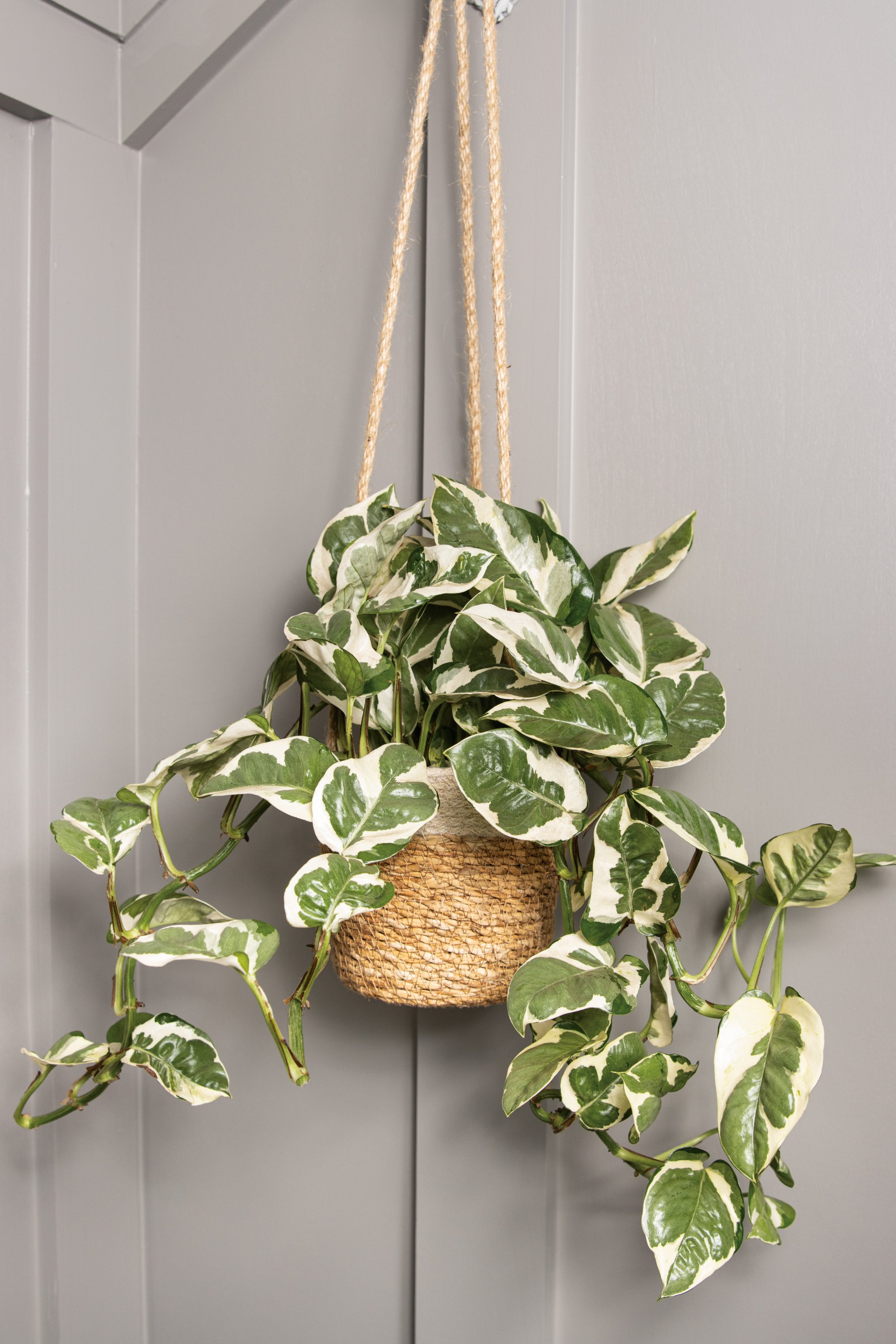 Pothos can be allowed to trail, sprawl or climb, or kept bushy for a more compact look. Here’s how to display these plants in your home or office:
- Plant a trailing type in a hanging basket and display in the corner of a living room or entryway.
- Train the vining stems of a pothos plant horizontally along a windowsill, mantle or bookcase.
- Use a support such as a moss pole or trellis to grow pothos vertically. Display in an entryway or other narrow space.
- Plant a pothos in a decorative pot that matches your indoor decor. Display on a shelf, coffee table or end table.
- Vining pothos can be trained around the perimeter of a window frame and held in place with cup hooks for a natural indoor look.
- Place a hanging pothos in a bathroom or kitchen to take advantage of the higher humidity levels.
- Display on an office desk to enjoy a bit of greenery throughout the work day.
- Group alongside other houseplants with similar needs on a hallway table for a captivating display.
Find more tips on decorating with houseplants.
POTHOS COMPANIONS
Grow these houseplants with similar growing needs alongside pothos for a captivating indoor display:
- Austere Luster™ Superba snake plant
- Cling-On® Over the Edge™ ficus
- Mysteria® Spotsylvania variegated monstera
- Prismacolor™ Emerald Ripcurl™ hairy philodendron
- Submerged Relics® Bananacle™ corn plant (dracaena)
- New Vogue® Feeling Flirty™ purple tradescantia